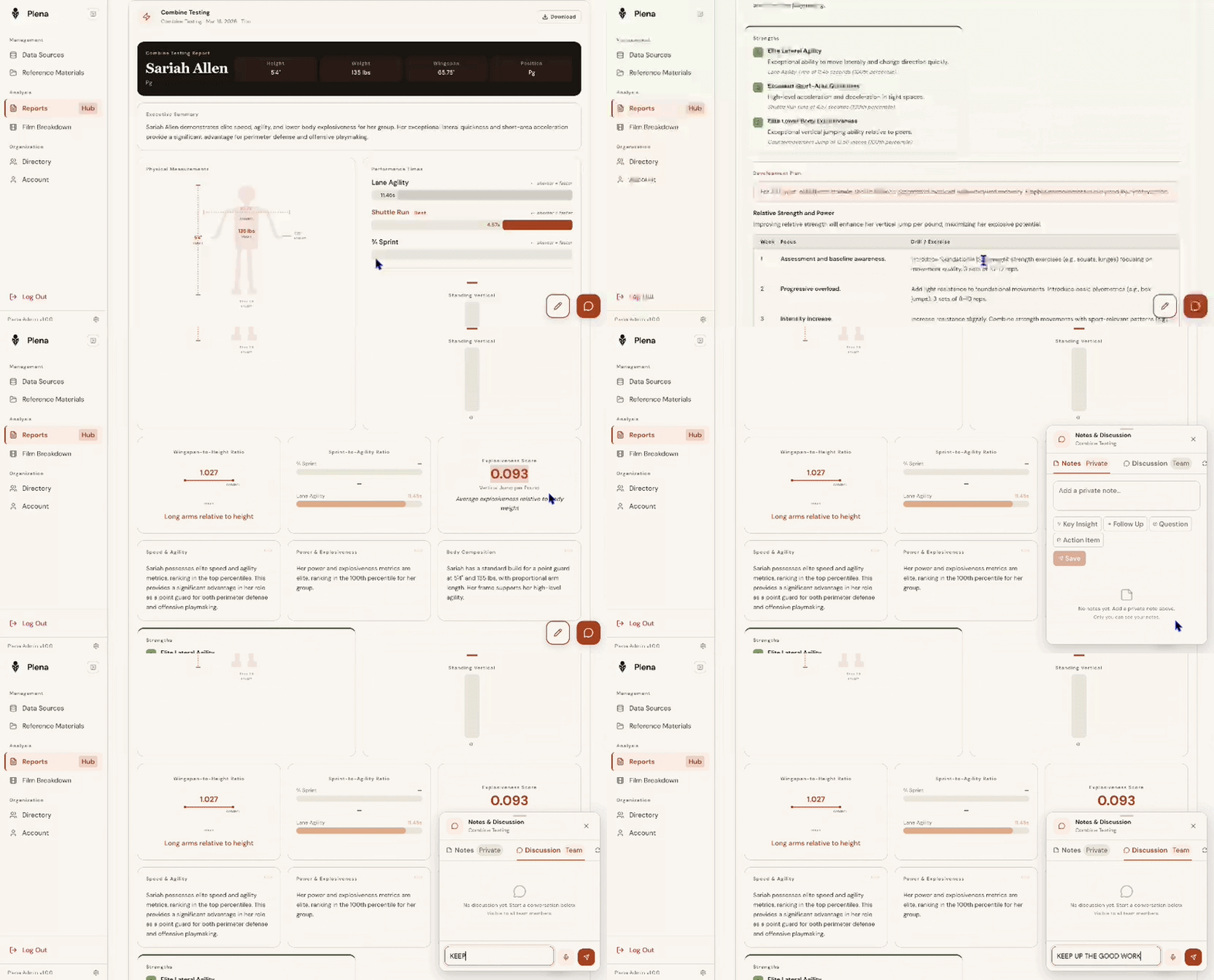
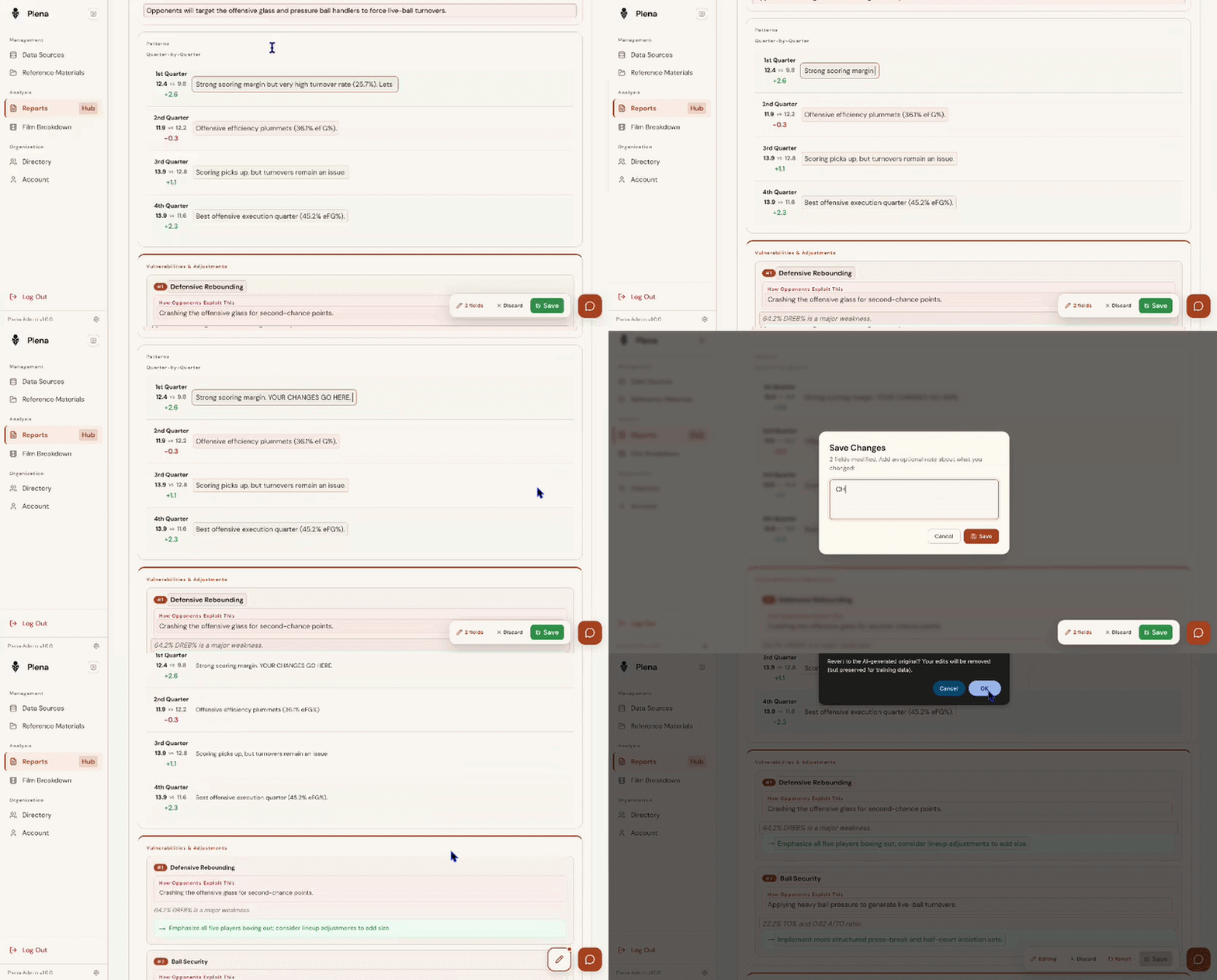
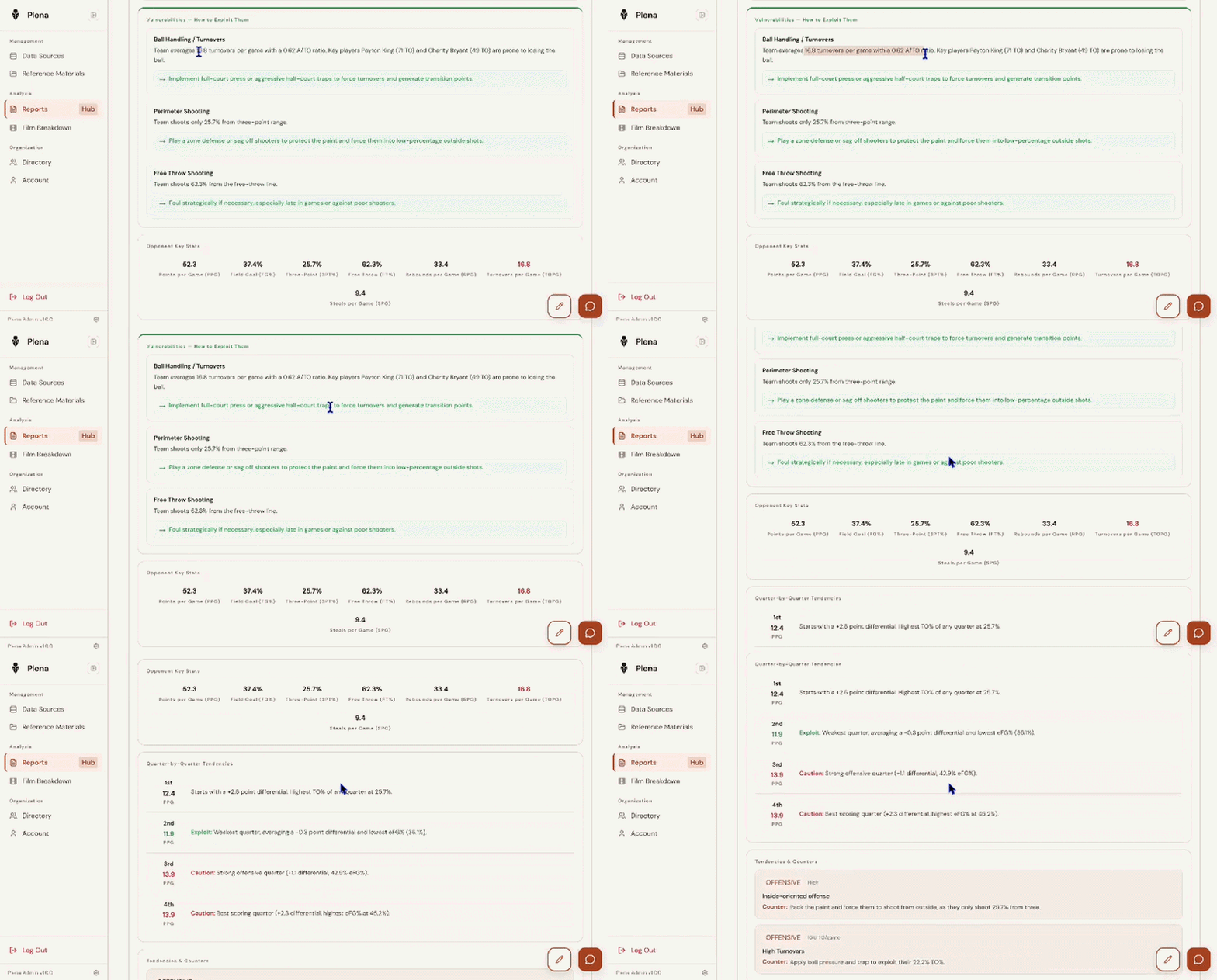
Plena is a system that ingests research, documents, generates auditable reports, and learns from coaches' feedback. We emphasize ease of use, reliability, AI transparency, and staff control on every report.

We turn stats into performance, trends, and recommendations for your team.

We equip you with trustworthy intel ahead of every matchup.

You always have the last say — not generic, static templates.
Plena reads what you already produce, reasons over it using specialized AI, and delivers reports anyone can use. It is like having a Ph.D.-level analyst available 24/7, at a fraction of the cost.
Every report is generated from data, cites its sources, and passes through your coaches before it's final. Below: an actual Player Development report structure, produced by Plena.
General AI tools in the market invent statistics and attribute them to real players. Plena does not. This is the single most important difference for any program considering AI in their workflow.
When Plena writes "Marcelo converts 77.6% from the free-throw line," that number is not recalled from the model's training data like generic tools. It's retrieved from your own box scores, and there is a link to the claim. In every report, you can click any number and see where it came from.
This is applied rigorously throughout the reports, with internal tools for audits.
No need to hire a team of analysts. Focus on what you're best at: your players and your team.
Give parents, players, and staff reliable reports they actually love to read.
Plena is a research and development company built by PhD researchers. We're always implementing the latest to make basketball intelligence better.
Not every AI tool is built for the realities of a program. Here's how Plena compares to the main alternatives.
| Just Humans | Humans + ChatGPT | Other AI tools | Plena — today | Plena — at 4 months | |
|---|---|---|---|---|---|
| Factual accuracy | Accurate but limited by analyst bandwidth and available film time | Invents stats and player names not in the source — AI fills gaps with plausible fiction | Same fabrication risk — generic tools have no access to your actual documents | Every output is sourced from your own documents — no fabricated data | Accuracy improves further as the system learns the patterns of your program |
| Staff workload | 8–12 hrs per opponent report; fully manual — every season starts from scratch | Staff still locate, copy, and paste source material by hand — the inefficiency moves, it doesn't disappear | Partially automated but requires manual document prep every session | Documents ingested automatically; staff time goes to reviewing and approving, not analysing from scratch | Report generation accelerates as the system recognizes recurring patterns without being asked to |
| Full season of documents | Analyst must hold context manually — limited by memory and time | Hard reading-limit (context window) means full season logs cannot be processed at once | Same hard limit applies — most tools hit this ceiling with any substantial library | Smart research process pulls only the relevant pages from your full library on demand — no ceiling | Sources become more precise over time as the system builds a deeper understanding |
| Staff feedback | Implicit — experienced analysts improve, but knowledge walks out with staff turnover | No structured mechanism — corrections lost at end of each session; every report starts cold | Corrections not retained between reports | Coach edits are reinforce in reports — the system learns your standards | Feedback is learned as a permanent layer of your program's philosophy |
| Improves over time | Only if the same staff remains and works hard | Generic AI is taught to do many things, but at the end of the day, they are still generic | Other AI tools don't learn your system, terminology, or standards | Learns from every report cycle | Plena builds a deep fingerprint of your program, and the more you use it, the more helpful it becomes |
We're adding programs every week. Join the list to get access.